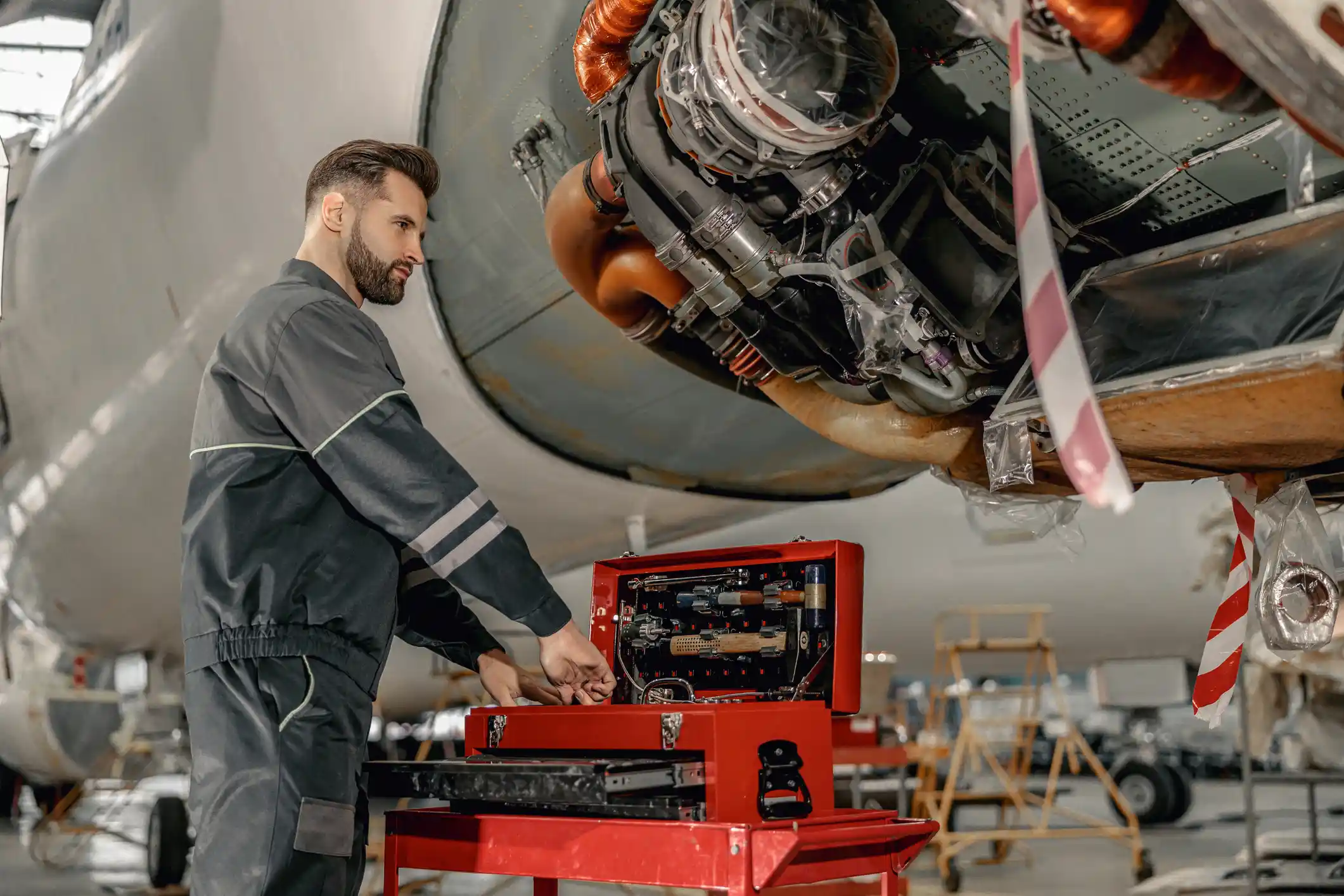
Europe’s commercial aviation sector is experiencing one of the most significant periods of technical talent shortage in decades. The combination of a post-pandemic rebound in air travel demand, accelerating fleet renewal programmes across the major airlines, and a demographic gap caused by retirements and pandemic-era career departures has created a structural shortage of EASA Part-66 licensed engineers that shows no sign of resolving quickly.
The Scale of the Problem
Industry projections point to a shortage of over 15,000 licensed engineers across Europe over the next ten years, with the shortfall most acute at B1.1 mechanical and B2 avionics category level. Network carriers, low-cost operators and MRO organisations are all competing for the same relatively small pool of experienced, type-rated engineers — and that pool is shrinking as engineers retire faster than new candidates complete the Part-66 licence pathway.
The situation is compounded by geography. While demand is genuinely pan-European, many licensed engineers are reluctant to relocate internationally, creating pockets of acute shortage in countries like Germany, the Netherlands and Scandinavia even where supply theoretically exists elsewhere. The practical result is that operators in high-demand locations are paying significant premiums — or offering flexible international contract arrangements — to secure the engineers they need.
What Employers Are Doing
The organisations filling roles successfully are no longer relying on advertising alone. Engineers with current A320 Family or B737 ratings typically receive multiple approaches before they have updated their CV. Employers who are succeeding have built candidate relationships over time, respond quickly when talent becomes available, and can offer packages — including base pay, shift premiums, accommodation allowances and flexibility on shift patterns — that reflect current market conditions rather than internal benchmarks from a different era.
Increasingly, successful employers are also broadening their geographic sourcing. At Protec Technical we work with candidates across the UK, Ireland, Germany, France, the Benelux region and Eastern Europe. We have placed engineers in roles requiring international relocation by focusing on the quality and career development dimensions of the opportunity — not just the headline salary figure.
The Position for Candidates
If you hold a current EASA Part-66 B1 or B2 licence with experience on a commercial type, you are in an unusually strong negotiating position. The demand-supply imbalance means you have more choice, more leverage on compensation, and more ability to specify the conditions of your next role than at any point in recent memory. The key is keeping your licence current, your type ratings valid, and your recent experience well-documented — because the best opportunities move quickly and employers are making decisions at pace.
Registering with a specialist recruiter before you are actively looking gives you access to the best mandates as they arise, and means you are not negotiating from a position of urgency when the right role appears. We would welcome the conversation.